
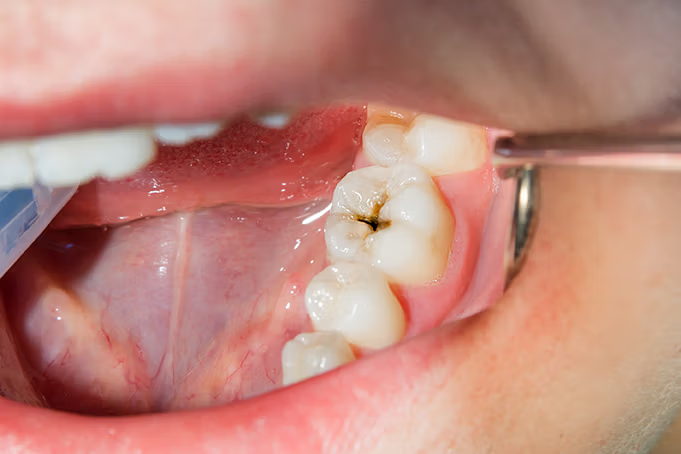
“My child brushes twice a day. Why do they keep getting cavities?”
This is one of the most common questions I hear from parents.
And honestly, it is a really good question.
If your child is brushing regularly and still developing cavities, it does not necessarily mean they are doing something wrong. Cavities are caused by a combination of factors, and brushing is only one piece of the puzzle.
At Voorhees Pediatric Dentistry, we like to look beyond simply treating a cavity. We want to understand why it happened in the first place and, more importantly, what we can do to help prevent the next one.
Here are seven common reasons children develop cavities, even when they brush their teeth.
One of the biggest things parents don't always realize is that how often a child eats can matter just as much as what they eat.
Every time we eat carbohydrates or sugars, the bacteria in our mouths can produce acids that attack the teeth. Saliva helps neutralize those acids and gives teeth a chance to recover between meals.
But if a child is constantly grazing throughout the day, the teeth may not get much of a break.
A typical day might look like:
Even if many of those foods seem relatively healthy, the constant exposure can increase the amount of time teeth spend in an environment where cavities can develop.
This is one reason I often tell parents that the question isn't just, “What is my child eating?”
It's also: “How often are they eating or drinking?”
Juice and soda are obvious examples, but they aren't the only drinks worth thinking about.
Sports drinks, sweetened teas, flavored drinks, and other beverages can contain significant amounts of sugar or be acidic enough to contribute to dental problems.
And there's another issue: sipping.
A child who drinks a sugary beverage over several hours is repeatedly exposing their teeth rather than having that exposure occur once.
Water is generally the best choice between meals.
Milk can also be a nutritious part of a child's diet, but timing and overall eating patterns still matter.
If you're unsure whether a particular drink is contributing to your child's cavity risk, bring it up at your child's dental appointment. Sometimes the answer is a surprisingly simple change.
Some foods disappear quickly from the mouth.
Others like to hang around.
Sticky foods can remain in the grooves and between the teeth for longer periods of time, giving oral bacteria more opportunity to use the carbohydrates they contain.
Examples can include:
That doesn't mean your child can never eat these foods.
Instead, think about frequency, timing, and what happens afterward.
A sticky snack eaten once with a meal is very different from a child carrying around a bag of gummies and eating them throughout the afternoon.
Fluoride is one of the most effective tools we have for preventing cavities.
It helps strengthen tooth enamel and can help teeth become more resistant to the acids that contribute to tooth decay.
For many children, that means using an appropriate amount of fluoride toothpaste twice a day.
How much toothpaste should your child use?
Under age 3
A smear or rice-grain amount of fluoride toothpaste is generally recommended.
Ages 3–6
A pea-sized amount is generally recommended.
Parents should help young children brush and supervise them as they learn.
The exact recommendations can vary based on a child's individual cavity risk, so your pediatric dentist can help determine what is appropriate for your child.
“Brushing twice a day” sounds straightforward.
But there is a big difference between brushing twice a day and effectively cleaning all the surfaces of the teeth twice a day.
Kids are still developing the coordination needed to brush thoroughly.
They may quickly brush the front teeth while missing the chewing surfaces, gumline, back teeth, or other difficult-to-reach areas.
That's one reason I generally don't recommend assuming that a young child can completely take over brushing on their own.
Parents may need to help or follow up with brushing for years longer than they expect.
An electric toothbrush can also be helpful because it can make effective brushing easier for children.
At Voorhees Pediatric Dentistry, we don't just tell kids to brush better. We show them how to brush, where to focus, and how to use their toothbrush effectively.
A toothbrush can't clean everything.
When two teeth touch each other, the toothbrush bristles generally can't reach the area between them.
That's where flossing comes in.
If your child's teeth are touching, cleaning between those teeth becomes an important part of their oral hygiene routine.
And this is another area where kids often need help.
Flossing requires coordination and patience, so don't expect a young child to do a perfect job independently just because they've been given a container of floss.
If you're not sure whether your child should be flossing yet or how to do it properly, ask your pediatric dentist to demonstrate.
Sometimes parents do everything “right” and their child still develops cavities.
That can be incredibly frustrating.
Cavity risk isn't determined by brushing and diet alone. Factors such as tooth anatomy, enamel characteristics, saliva, oral bacteria, previous cavities, fluoride exposure, and other individual factors can all contribute.
Some children naturally have deep grooves and pits in their teeth that are more difficult to keep clean.
Some children have a history of cavities that puts them at higher risk of developing more.
And sometimes two children in the same household can have completely different cavity experiences despite having very similar routines.
That's why we don't believe in a one-size-fits-all approach.
Start by looking at the whole picture.
Ask yourself:
These questions can be much more helpful than simply asking whether your child brushes twice a day.
One of the most important things I want parents to understand is that cavities are not simply a result of not brushing enough.
Brushing matters. A lot.
But preventing cavities is really about looking at the entire oral environment: diet, frequency of eating, drinks, fluoride, brushing, flossing, tooth anatomy, saliva, bacteria, and your child's individual risk factors.
At Voorhees Pediatric Dentistry, we spend a significant amount of time talking with families about these factors because treating a cavity is only part of the job.
The bigger goal is helping you understand why your child developed cavities and what you can do differently moving forward.
Sometimes the solution is a major change.
Sometimes it's one small adjustment to a daily routine.
And sometimes, despite doing everything you can, your child simply needs additional preventive support.
That's exactly why personalized pediatric dental care matters.
If your child seems to be getting cavities despite regular brushing, you're not alone—and it doesn't mean you're failing as a parent.
A pediatric dentist can look at your child's individual risk factors and help you develop a realistic prevention plan.
At Voorhees Pediatric Dentistry, our goal is not just to fix cavities. We want to help families understand why cavities happen in the first place so we can work together to prevent them.
Come join the Voorhees Pediatric Dentistry family and experience how we nurture your child's dental health with care and expertise. Pay us a visit in Voorhees, NJ, where Dr. Dan Dinowitz and our team will make your child's smile sparkle even brighter. Step into a place where beautiful smiles begin!


